Overview: Family Law Practitioners
Most people ring a family solicitor before they know which route their situation needs. A marriage may be ending. Or nothing has happened yet, and you would like to understand your position before it does. A family practice covers the whole span: prenuptial and postnuptial agreements, cohabitation agreements, separation, child arrangements, financial remedy work, and protective orders where there is risk. Triage comes first. The solicitor listens, then tells you whether this is drafting work, a mediation, or a matter for the family court.
Practices differ in how they run a file. Some are built around mediation and collaborative law, where each party keeps a solicitor and everyone signs up to settle rather than litigate; many belong to Resolution and work to its code. Others reach for proceedings sooner. Ask which routes the practice actually offers, who drafts your documents, and who attends a hearing. Hourly billing against money on account is usual, and fixed fees appear for an agreement or an undefended application. Legal aid survives in family work but is means-tested and limited.
Arrive at the first appointment with dates, a rough note of what each of you owns and owes, recent payslips, and any signed agreement.
Region and town lists below lead to the family practices around you. A town page names the practices based there, flags the ones a little further out, and shows what each states about its own work.
Cost of family law advice
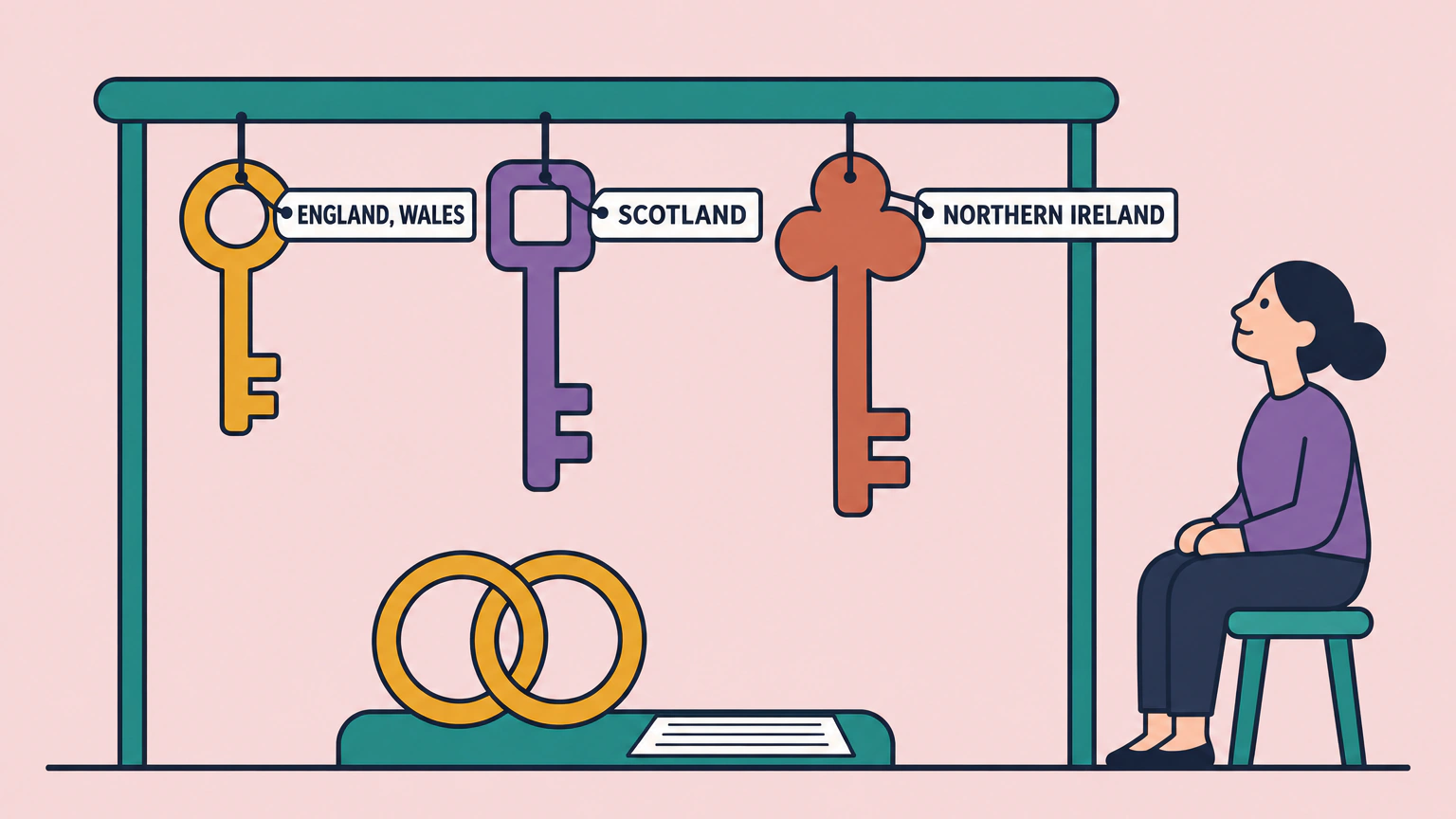
Start with the task: advice, a relationship agreement, support alongside mediation or urgent protective work. Separate routes have different budgets. Guides cover England and Wales. Scotland and Northern Ireland use different documents and protective procedures.
| Service | Indicative cost | What this covers |
|---|---|---|
| Initial family-law advice | Allow £240–£300 incl VAT for up to an hour. | Initial meeting and written advice; agree any document-reading limit. |
| Cohabitation or prenuptial agreement | Cohabitation: £1,100–£1,800; agreed prenup: £1,800–£3,600 incl VAT. | Straightforward drafting on agreed terms; each person’s independent advice is separate. |
| Solicitor advice alongside mediation | Allow around £290–£420/hour incl VAT. | Agree a capped review or stage estimate; mediator sessions are separate. |
| Protective application and first hearing | Initial legal budget around £1,800 incl VAT; court application £0. | Non-molestation application, supporting evidence and first-hearing representation. |
Check for extra costs
- Check disclosure, revisions, service, external counsel and expert costs.
Ask before choosing
What will I receive, who will represent me, and what events trigger an additional fee?
Funding
Ask about legal aid for eligible domestic-abuse and child-protection work.
Cost details
Initial family-law advice
Use the appointment to identify legal options, urgent steps and the next-stage budget. Ask whether follow-up questions are included. Ongoing correspondence, drafting or negotiations need a separate agreed scope.
Cohabitation or prenuptial agreement
These are separate document budgets. Agree the financial information required, revision rounds and signing arrangements. Unresolved terms, complex shareholdings, overseas assets or substantial negotiation need a bespoke estimate. A postnuptial agreement should be quoted for its own circumstances.
Solicitor advice alongside mediation
The solicitor can advise on proposals, explain their legal effect and help you prepare for mediation. The total depends on reading time, correspondence and the lawyer’s seniority. Turning a settlement into a binding order or agreement needs an expressly included or separately quoted drafting stage.
Protective application and first hearing
The allowance covers a defined initial non-molestation application and first hearing. Confirm urgent availability, who will attend, service and any out-of-hours charge. Occupation-order work needs its own scope. Contested return hearings, enforcement and further evidence require a revised estimate.
Frequently asked questions
What does a family law firm actually cover?
Prenuptial and postnuptial agreements, cohabitation agreements, separation, divorce, financial remedy work, child arrangements, and protective orders where there is risk. Some practices take adoption and surrogacy too. Crime, wills and probate, immigration and conveyancing sit with other solicitors, and a family practice worth instructing will point you there at the first appointment rather than take work it rarely does.
How do family law firms usually charge for work?
Hourly charging against money held on account is the usual arrangement. You pay a sum in, the practice bills its time against it, and you top it up as the balance falls. Fixed fees appear for defined pieces of work such as an agreement or an undefended application. Ask in writing what is covered, which fee earners charge at which rate, how often bills arrive, and what an unused balance does.
Is family mediation different from instructing a lawyer?
Yes. A mediator is neutral and acts for neither of you, helping you reach terms and setting them down. Your own solicitor advises you alone and can say whether what has been proposed stands up. Most people combine the two, working the substance out in mediation and then taking the draft to a solicitor for independent advice before it is signed.
Family law firm or divorce lawyer: which do I call?
Instruct a general family practice when the route is still unclear, or when the work is an agreement rather than an ending: a prenuptial agreement, a cohabitation agreement, a parenting arrangement between unmarried parents. A divorce practice picks the file up once the marriage is being dissolved, and a child arrangements practice deals with the children on their own. Most high street practices cover all of it.
What should I bring to a first family consultation?
A short written timeline, the dates that matter, a rough note of what each of you owns and owes, recent payslips and tax paperwork, and any agreement either of you has signed. Write your questions out beforehand. The appointment goes quickly, and most of it is the solicitor asking you things, so a list is the only reliable way to leave with the answers you came for.
How do I tell whether a family practice fits?
Ask which fee earner runs the file day to day, and who replies when you email. Ask how the practice usually resolves matters, because some settle by habit and others issue proceedings by habit. Ask what happens if you want to switch route partway through. A practice that speaks plainly about costs and staffing at the outset generally keeps doing so once the work starts.